
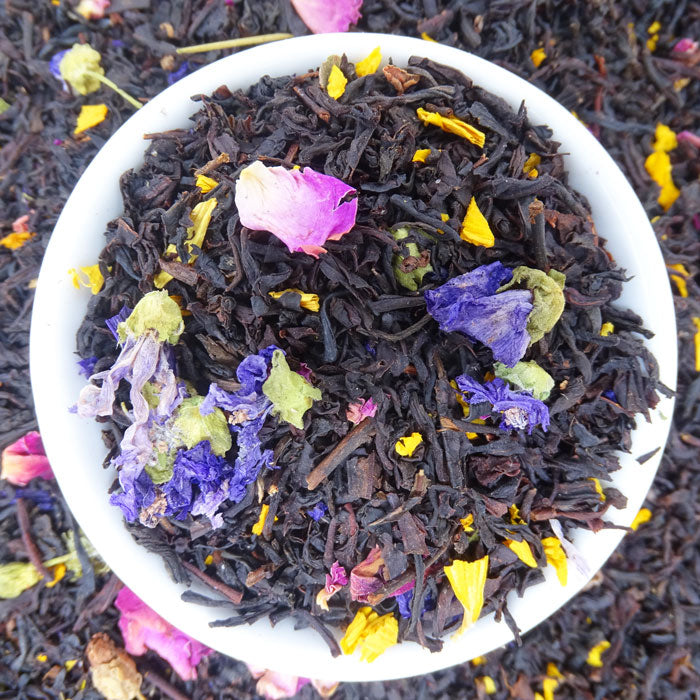

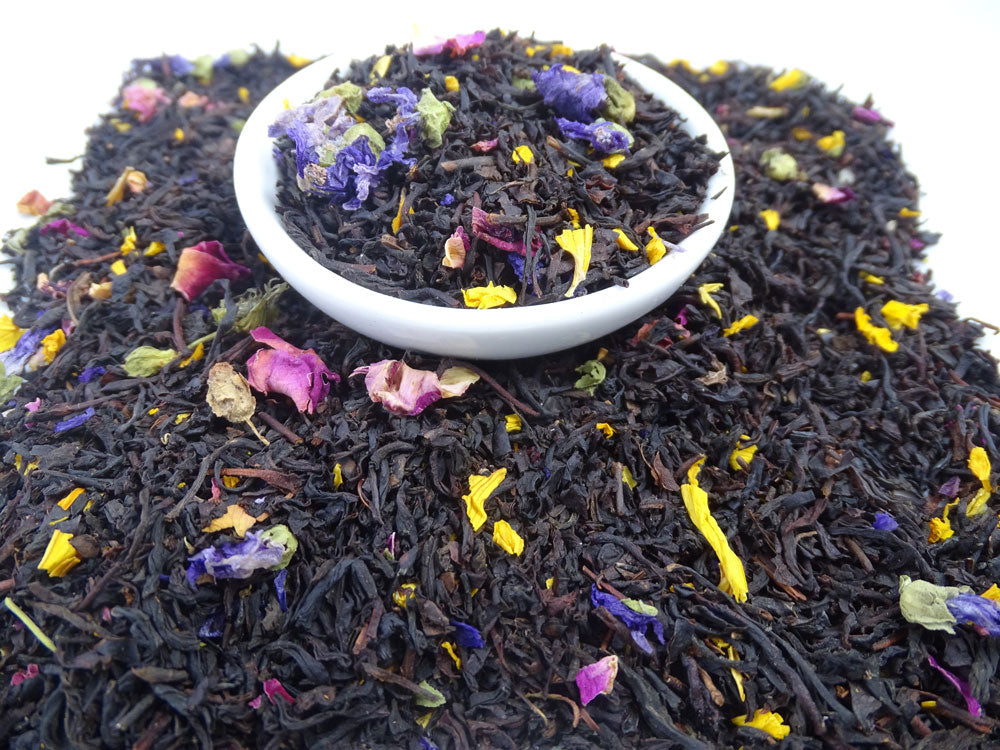
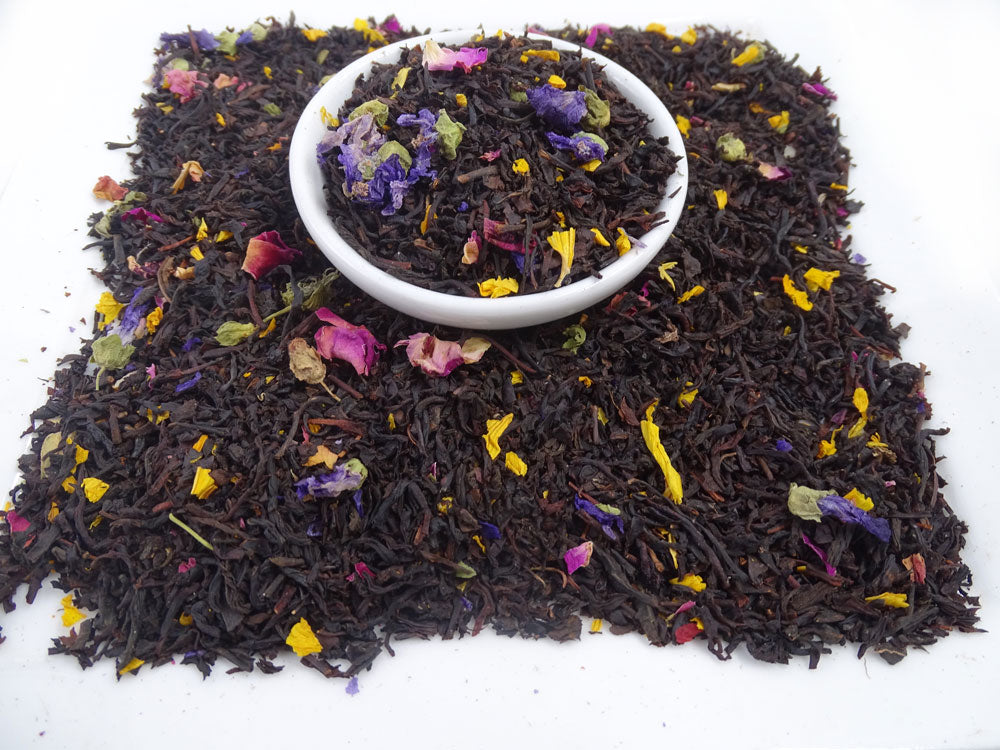
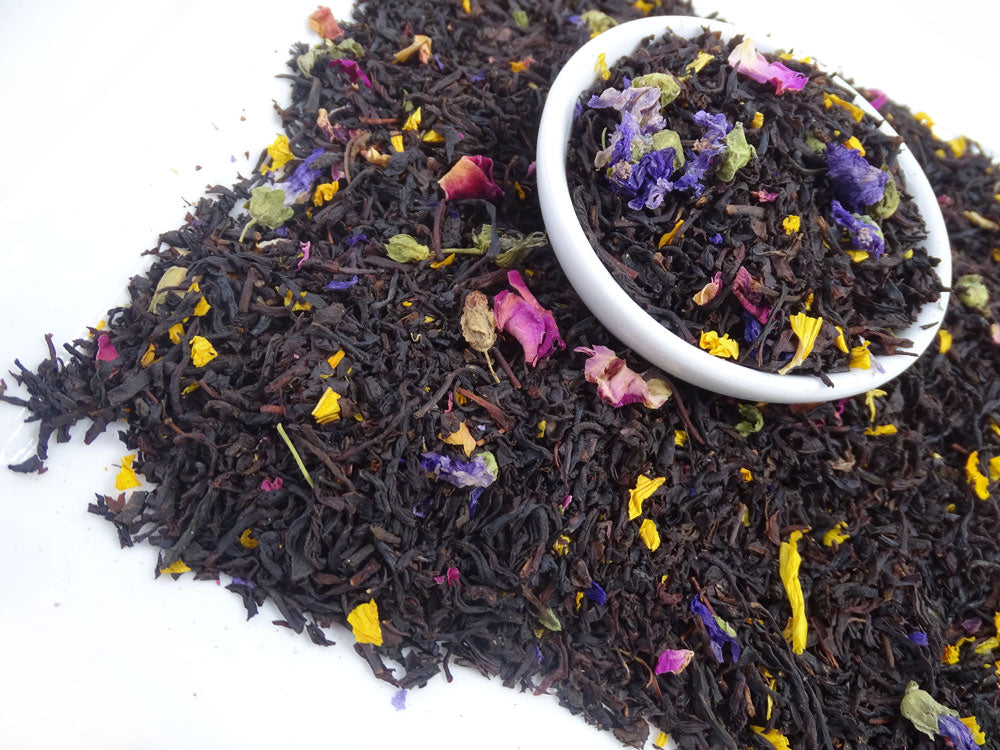
Heart & blood-pressure markers (tea overall): Controlled trials and a 2021 dose–response meta-analysis report that regular black tea intake can modestly improve blood-pressure measures (including variation over 24 h). Effects are small but consistent across long-term use. American Journal of Clinical NutritionRSC Publishing
Attention & alertness (tea’s caffeine + L-theanine): Recent systematic reviews of RCTs find tea, and theanine with caffeine, can acutely support attention and task performance in healthy adults. Benefits are context-dependent and typically modest. Oxford AcademicCambridge University Press & Assessment
Gut-microbiota interaction (mechanistic): Black tea theaflavins are transformed by gut microbes into smaller metabolites; emerging work suggests these may contribute to tea’s physiological effects. Human-relevance is still being clarified. MDPI
Soothing support from mallow (traditional use): European Medicines Agency monographs recognise mallow flower (Malva sylvestris) preparations for traditional use in mild oral/throat irritation due to their demulcent mucilage. European Medicines Agency (EMA)
Rose aroma & mood (context note): Trials of Rosa damascena (often via aroma or extract, not tea) show signals for reduced anxiety and improved sleep quality; these findings relate to rose constituents rather than brewed petal tea per se. Europe PMCScienceDirect
Evidence mainly reflects black tea and specific herbal monographs; benefits from the small amounts of petals/flavouring in this blend are primarily sensory.